Case Story
At Action for Rural Advancement (ARA), impact is not just measured in numbers—it is reflected in the real-life transformations of individuals and communities. Our case studies highlight the human stories behind our programs, demonstrating how timely support, awareness, and access to services can change lives.
These stories provide powerful evidence of how ARA’s integrated approach—combining legal aid, community engagement, and empowerment—creates lasting and meaningful change.
📖 CASE STUDY-1 : Rayhatul Jannat Rimi – From Child Marriage Survivor to Entrepreneur
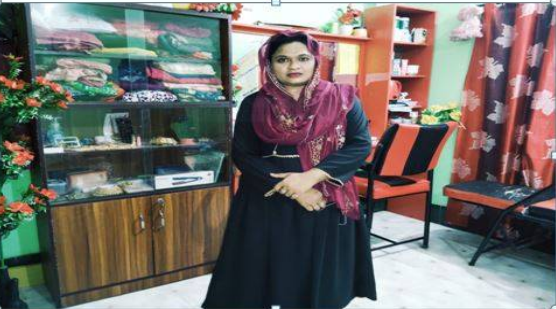
Rayhatul Jannat Rimi transformed from a child marriage survivor facing abuse into the Chairperson of her Ward Women’s Protection Forum and a successful entrepreneur. Rimi, a resident of Ward No. 01, was married at the age of 13. She is a mother of two,and her life was marked by constant harassment from her husband. Trapped in poverty and social stigma, she sought a way out.Rimi became actively involved in community initiatives. With support from WWPF members, she and fellow member Soheli Jannat received a three-month beautician training organized by the District Women Directorate. After completing the training, Rimi opened her own beautification center in town.The Ward Women’s Protection Forum(WWPF) provided Rimi with a platform for engagement and linked her to skills training. The District Women Directorate’s training program gave her the practical skills for entrepreneurship. Rimi showed remarkable
courage and leadership. She states, “The training gave me confidence. Now I have my own income and identity.”Rimi’s financial independence supports her family. Her success story inspires other women in her community to seek training and economic opportunities, demonstrating that change is possible.Rimi’s journey teaches that community support and targeted skills training can empower survivors to rebuild their lives. Her story is a model for women’s economic empowerment. A WWPF member noted, “Rimi is proof that when women support each other, they can overcome any obstacle.”
📖 CASE STUDY-2 : Bilkis Begum – Restoring Dignity Through Community Support
Bilkis Begum, a marginalized migrant woman, reclaimed her safety and family life through community arbitration facilitated by the WWPF. Bilkis, a mother of two in Ward No. 05, endured daily physical and mental harassment from her husband, Abdus Salam Gaji. She was forced out of her home and lived in
extreme poverty with her parents for a year. Bilkis shared her situation with WWPF members. They, along with local ex-LGI representatives and social leaders, arranged an arbitration. Her husband was confronted, acknowledged his abuse, and signed a formal pledge to stop the violence and take responsibility for his family.The WWPF acted as the critical first responder and mobilizer. It leveraged community leadership to conduct a successful intervention that prioritized dignity and safety. “I had no one. The forum became my voice and my strength,” says Bilkis. Bilkis now lives safely with her husband, who cares for the family. This case strengthened community mechanisms for protecting women and showed that collective action can resolve family violence.This story highlights the effectiveness of community-led mediation in restoring rights and peace. It underscores the WWPF’s role as a protector. A social leader involved said,“We showed that abuse is a community concern, not just a private matter.”
📖 CASE STUDY-3 :Rocksana – Victorious in the Battle of Life
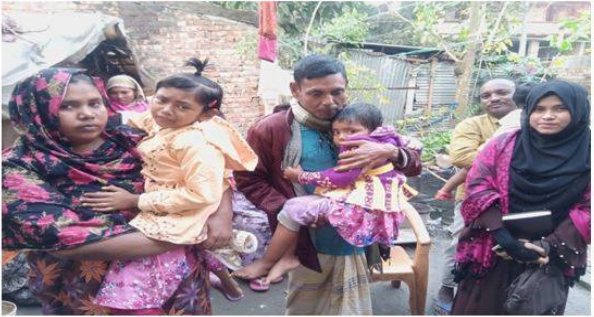
Rocksana, a marginalized migrant and child marriage survivor, secured justice and a peaceful family life through legal aid coordinated by the WWPF.Rocksana, from Ward No. 06, was married to Abdur Rahim. She suffered physical abuse,was expelled from her home, and lived in poverty with her two children at her parents’house for six months. The WWPF linked her case to the District Legal Aid Committee. The committee issued a notice to her husband, requiring him to sign a bond promising never to abuse her again.After this, Rocksana and her children returned to live with her husband peacefully. The WWPF connected Rocksana to formal legal services, bridging a gap she could not cross alone. The legal bond provided enforceable protection. “The legal paper was my shield. It gave me back my peace,” Rocksana shares.Rocksana’s case demonstrates how community forums can facilitate access to justice, offering a clear pathway for other women facing similar violence to seek legal recourse and safety.Rocksana’s victory shows the power of combining community support with legal authority. It is a replicable model for protecting women’s rights. A committee member stated, “The forum’s referral ensured timely and effective legal action.”
📖 CASE STUDY-4 :Fatima Khatun – A Champion in the Fight for Self-Reliance
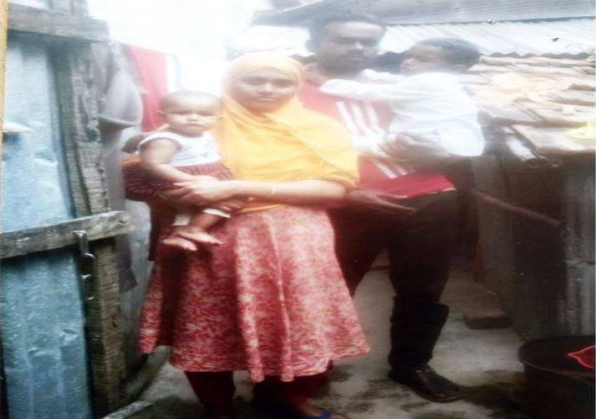
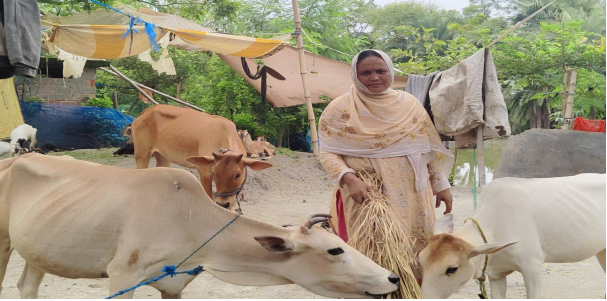
Fatima Khatun escaped deep poverty to become a thriving livestock entrepreneur through training and support accessed via the Women’s Protection Forum under the RENEW Project.Born into poverty in Padmapukur, Satkhira, Fatima was married at 14. Her husband lost his job, and the family, burdened by debt, moved to Satkhira city.Her initial attempt at poultry farming failed.After joining the Women’s Protection Forum (formed with support from ARA under the RENEW Project, Christian Aid, and Manusher Jonno Foundation), Fatima learned about services. She received livestock rearing training from the Youth Development Directorate. She sold a gold ring to buy her first cow and applied her new knowledge successfully. The forum provided crucial information and linkage to government training. The RENEW Project’s network enabled this connection. Fatima’s determination was key. “The training opened my eyes. I used my last resource, my ring, to start my new life,” she says. Fatima now owns three cows, five goats, 45 chickens, and 16 ducks. Her income supports her family, her husband is employed, and her sons are in school. Her success inspires other women in the forum. Fatima’s story proves that with access to training and a supportive network, women can lead their families out of poverty. This model is highly effective for economic empowerment. A project field officer observed, “Fatima didn’t just receive training; she
seized the opportunity with incredible courage.”
📖 CASE STUDY-5 :Salma Sultana – Positive Changes Through the Cultivation of Chui Jhal
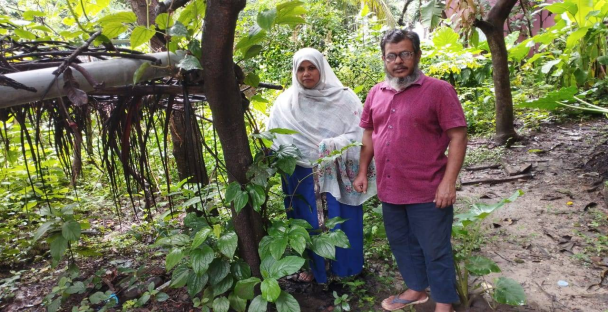
Salma Sultana, a struggling housewife, became a successful entrepreneur and community role model by cultivating chui jhal with guidance from the WWPF and agriculture officials. Salma, from Mithabari village, Tala Upazila, faced financial hardship supporting her household and son’s education.After losing her part-time job,she was in despair.She had yard space, but shade prevented vegetable farming.At a monthly meeting of the Ward Women’s Protection Forum in Sultanpur, Upazila Agriculture Officer Yasir Arafat spoke about home cultivation. A forum volunteer facilitated a visit.The officer suggested cultivating chui jhal, a shade-tolerant spice. Salma planted saplings, and her first harvest earned her 80,000 BDT during Eid-ul-Adha.The WWPF created the link to technical expertise.The agriculture officer provided the specific, viable solution tailored to her constraints. Salma’s hard work brought it to fruition. “They showed me the way. I worked day and night, and it changed my life,” Salma explains. Salma now manages household expenses, pays for her son’s education, and sells saplings to other women. Her success has inspired many neighbors to start similar cultivation, promoting self-reliance. Salma’s journey demonstrates the impact of context-specific agricultural extension delivered through women’s groups. It turns constraints into opportunities. The Agriculture Officer remarked, “Salma’s success is a perfect example of how one right
idea can ignite an entrepreneurial spirit.”
📖 CASE STUDY-6 :Shela Rani Mandal: A Mother’s Fight for Education and Dignity
Shela Rani Mandal was born into a middle-class family in Assasuni, Bordal, Khatrabad. Her father was a rural doctor and a respected person in the community, while her brothers were either employed in government jobs or engaged in business. Her marriage was arranged, but from the very beginning, life at her in-laws’ house became difficult. Her mother-in-law disliked her because of her complexion and
gradually poisoned her husband’s mind against her, leading to frequent physical abuse. After the birth of her first child, the abuse escalated to a life-threatening level. When her child was between one and a half to two and a half years old, her in-laws attempted to force-feed her poison. She resisted and screamed until neighbors intervened and saved her life. While she was hospitalized, her brothers threatened legal action, which frightened her in-laws. Her husband then abandoned her at her father’s house and filed for
divorce. Despite her father’s warning reminding her that her elder sister had been killed by her in-laws Shela Rani chose to return to her husband’s house for the sake of her child’s future. The local primary school headmaster, Molay Doctor, intervened and took responsibility for her safety, promising to act if she was mistreated again. Her mother-in-law strongly opposed sending the children to school, especially her daughter, claiming it was a waste of money. But Shela Rani was determined to educate her children. With no formal training, she taught herself tailoring by deconstructing old clothes and practicing on rags with chalk. Later, she received formal training through World Vision. To fund her children’s education, Shela Rani worked tirelessly across multiple livelihoods:
Tailoring: Custom orders during the day and ready-made clothes at night.
Livestock: Raising poultry, a cow, and especially hens and ducks; selling eggs and birds in the market.
Tutoring: Teaching local children.
Factory Work: Night shifts at a snack factory.
For fourteen years, she sacrificed her own comfort—often skipping meals and sleep—to secure her children’s future. Her sacrifices brought remarkable success:
Her son ranked first in the district in his SSC exams and was admitted to BUET (Bangladesh University of Engineering and Technology).
Both her daughters completed their Honors degrees.Today, her household dynamics have completely changed. The husband who once
ignored and abused her now respects and listens to her. In her community, she is admired as a woman who achieved what many men could not. Shela Rani Mandal proudly acknowledges that her courage to share this journey was strengthened by ARANGO, which gave her the platform to tell her story. Her achievements are not only a source of pride for her family but also an inspiration for her entire community.